Saturday, November 29, 2008

Rea Thloka Pula! Hona Joale!


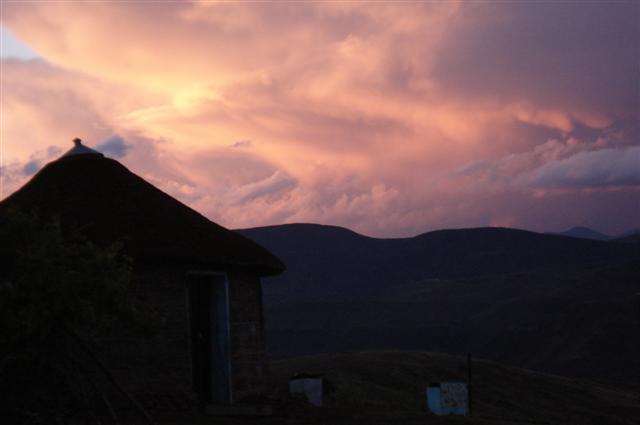
Months of Drought, Limited Bathing and Washing, Garden of Dried Brittle Plants… Waiting for rain is another thing I’ve learned patience for here in Lesotho. For the last few months we’ve had a serious drought. At this time last year the fields were green and full of corn, sorghum and sunflowers reaching towards the hot summer sun. Now, the fields are dry red soil, some remnants of the stalks of last year wave in the breeze like scarecrows to the rain.

Rea Thloka Pula! Hona Joale! (We need Rain! Right Now!)

Basotho Time

The other day Me’ Mphone stopped by my house to ask for help. She’s a teacher at the primary school and one of my friends in the village. She had a question about her keyhole garden that she was constructing and wanted “2 minutes” for me to come and look at it. I told her I would stop by later (because I was cooking), but she talked me into following her to help with her garden. I turned off my stove burner, slipped on some shoes and headed out of my family compound, fully knowing that “2minutes” was going to be at least 1 hour.

Here in Africa things operate on "Africa Time" or "Basotho Time". This essentially translates to things will happen whenever everyone is ready with little or no stress or pressure which usually happens hours or much later that you expect or are told. This isn’t always a bad thing, but its much different than the punctuality I’ve experienced, stressed about and sweated over in America. In my village in Lesotho if I’m invited to a meeting that is scheduled for 10am it will likely start at about 12pm. Same with shops opening and school starting. Its time to open and start school and businesses when everybody is ready.


The day that Me’ Mphone stopped by I finally made it to look at her garden almost 2 hours after I left my compound. I can walk from one end of my village to the other in about 10minutes, but on the way to her house we had to stop and visit with many people. My Sesotho isn’t that great, but I still communicated ok with some of her family, friends and people in the village. My stomach growled as I walked through the village and sat visiting in dark huts thinking about my tuna pasta getting cold in my own hut. I couldn't help but laugh to myself about the "2 minutes".


By the way, her garden was beautiful and she didn't really have any questions, I think she just wanted me to visit her and her family.


Tuesday, November 11, 2008

In a "Forgotten Corner of the World"

...to those who are huddled around radios in the forgotten corners of the world, our stories are singular, but our destiny is shared, and a new dawn of American leadership is at hand. ~ Barack Obama

On the early morning of November 5th (it was Nov 4 evening in America), I was huddled in my grass hut in Lesotho wrapped in a fleece blanket listening to history take place in America and across the world. I had my shortwave radio sitting on the end of my bed, and listening to the the last of the votes coming in on the West Coast. The Static live broadcast of the elections came through on of the Voice of America as the sun started to rise here in the Southern Hemisphere. I can't fully explain how I felt when they announced Barack Obama as my next President and then when Obama gave his amazing speech. I had tears streaming down my face and felt a sense of relief and a sense of hope especially on the global scale. It was something I felt in my village as soon as the message got out. Here in Lesotho everyone is excited and hopeful, waiting to see where America goes from here and believing that anything is possible in this world.


African Library Project. Donors Needed

Hello Everyone, In an effort to help the communities in the remote Mashai River Valley, I'm working with 5 schools near my village to establish libraries. The African Library Project is working with Peace Corps volunteers in Lesotho to facilitate and set up libraries all over the country and to help establish book drives in America. The cost of mailing books is enormous and African Library Project is coordinating a freight container of libraries expected to arrive in May 09.


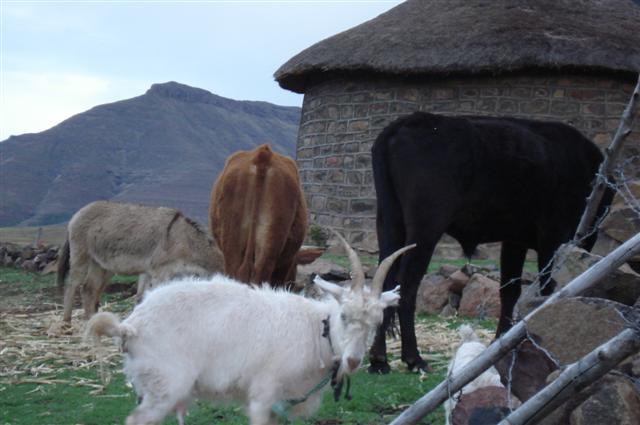
The remote schools in the mountains where I live in Lesotho have no running water or electricity, no phone signal and most of these students have never left the Mashai River valley, never rode in a car, seen a television or computer, and most don't even own a book. The students in the Mashai River Valley live in small one room grass and mud huts called rondavels with their large families. When they get home from school they have many chores like washing clothes by hand, collecting water from the river, taking care of animals like cows, sheep and donkeys and much more. Many of these students are single or double orphans due to the high rate of HIV prevelance in Lesotho (about 29%). We hope that a few library books will open the students' minds to a world of possibilities and inspire creativity and imagination. The books will also help students increase vocabulary of English (the second official language in Lesotho).


If you have a contact with a school, library or group that might be interested in holding a book drive, please forward this on. If your interested in organizing a book drive please go to the African Library Project website at: http://www.africanlibraryproject.org/ and click on Book Drive guidelines. There are very specific instructions on how to organize a book drive, how to ship the books to the African Library Project (you ship the books to them in America and they ship the books to me in Lesotho). They will be your contact throughout the book drive process (as my access to the internet and phone is very limited).


Please tell them your book drive is to go to Lesotho and the volunteer your working with is Pam Rogers. Please also email me if you have any questions, need "facts" about Lesotho, need additional photos to promote the book drive (although I have a lot at my photo website at http://picasaweb.google.com/ponderosapam


Thank you for your time and consideration in this project. Please email if you have any questions, I head back to my village tomorrow but I'll be checking my email again before Thanksgiving.


Lesotho AIDS Diary

Check out this Link on BBC News about Lesotho and AIDS

Lesotho Aids Diary

Thursday, September 18, 2008

Culture Festival


St.Theresa Secondary school had a wonderful cultural celebration. James and I attended the day long celebration to support our students and experience more of Basotho culture. The students spent most of the morning dancing and singing in their beautiful colorful clothing and traditional wool blankets. In the afternoon we ate platefuls of traditional Basotho food.


It was awesome watching the culture dances with a backdrop of mountains and clouds Basotho diet primarily consists Papa (maize meal), Moroho (cooked cabbage), Nama (meat), Mokopu (pumpkin) and the drink Motoho (a fermented sorghum drink). Then there were a few huge buckets full of joala (booze made from fermented sorghum or corn). They also slaughtered a cow so we had beef with all of our sides. Everything was eaten without silverware and about 50 of us passed around a wet dishcloth to "clean" our hands. It was a fun day and I took a lot of photos and videos to share when I return back to the states.


Keyhole Gardens

I've been working with village health workers and members of HIV support groups recently to talk about Keyhole Gardens and nutrition for HIV+ folks. Keyhole gardens are circular raised beds that are constructed right outside the door (close, easy to maintain & water). There are many organic layers of grass, manure and soil in the garden creating a small but healthy soil soup of nutrients. Ideally throughout the year these gardens can be an overflowing feast of vegetables. Keyhole gardens also have a "keyhole" constructed of sticks, grass and manure where "gray water" can be dumped. Culturally its not normal to use gray water on your food for Basotho, in an area where water isn't always available, its important to save every drop of water.

These workshops over the last month have been very successful for me and my role here as a Peace Corp volunteer. In reality I haven't "done" a lot, I didn't teach hardly at all at any of the workshops. My role for these workshops was to connect resources together especially with the local HIV extension workers, the community council and the Ministry of Agriculture farmers extension officers. I primarily met with the motivated extension officers talked together about what we thought should be introduced, made some colorful flipcharts & posters and they presented and organized everything. Over the few weeks that these workshops went on, about 70 health workers & support group members from 45 villages received training that they might not have received if I wasn't there to give a little encouragement and "push". Now my hope is for each village health worker and support group member to go back to their remote mountainous villages and teach and build workshops in their own communities. Next week I'll be working with a support group in my own village to construct 8 keyhole gardens for HIV+ folks &/or orphans and using seeds that were donated from home to help motivate.